WHAT NEXT?
The future of golf courses in Singapore is on tenterhooks after an announcement by the Ministry of Law earlier this year. Edited by JK Tan
The writing is on the wall. The number of golf courses is destined to reduce in the next decade.
Earlier this year, Singapore’s Ministry of Law dropped a bomb on the golf community and announced the closure of the Mandai Executive course by the end of 2026. Leases for four other golf clubs – Warren Golf & Country Club, Orchid Country Club, Keppel Club’s Sime Course, and the Singapore Island Country Club’s Bukit Course – will expire in 2030, and the lease for the Garden Course location at Tanah Merah Country Club will end in 2035. There are no signs that these leases will be renewed.
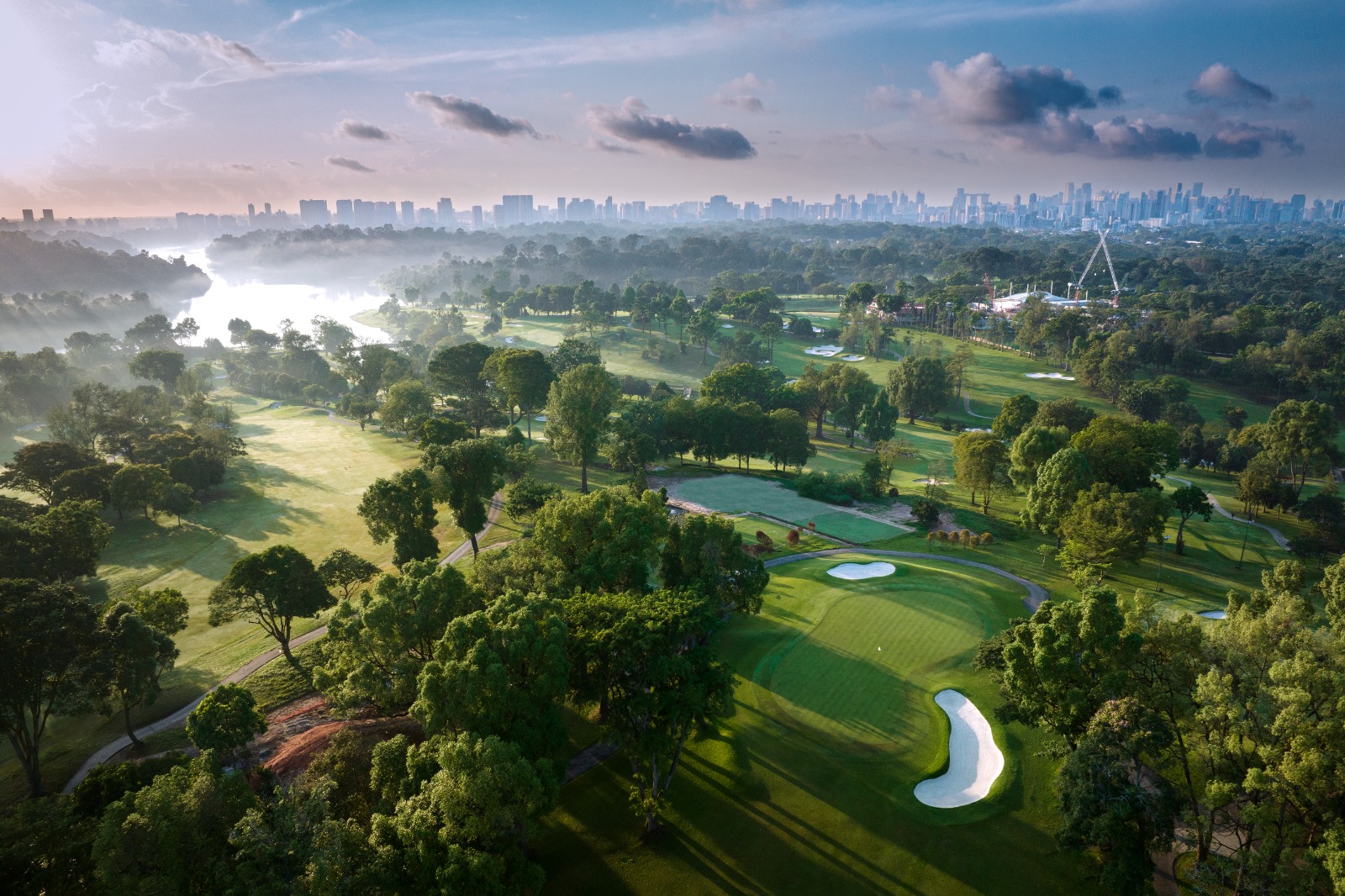
Amid this uncertainty, and the diminishing number of holes available to golfers in the near future, we asked several golf stakeholders to weigh in on the issue.
- Dominic Wall, R&A Asia Pacific Director (DW)
- Joshua Ho, Singapore Golf Association CEO (JH)
- Christopher Chiu, Tanah Merah Country Club Vice President (CC)
- Vincent Wee, Singapore Island Country Club former President (VW)
What was your initial response to the announcement?
DW: It is very disappointing that the Singapore Government has decided to not renew the leases for four golf courses which will effectively result in these courses closing by 2035. This is particularly concerning given the prominence that golf plays in Singapore on several levels.
It is a leading participation sport with numbers rising over the past few years; it is an accessible sport with programmes to encourage and develop new golfers into the sport through both off and on course facilities; Singaporean golfers are now achieving some great results on the world stage as evident by Hiroshi Tai being the first Singaporean to play in the Masters Tournament, and Shannon Tan winning on the Ladies European Tour; and some of the best tournaments globally are attracted to Singapore including the HSBC Women’s World Championship, tournaments on the Asian and DP World Tours, the LIV tournament and World Amateur Teams Championship.
These tournaments also play a significant role in showcasing Singapore on the global stage and encouraging tourism to Singapore. In addition to these points, golf helps facilitate funds to numerous charities in Singapore and therefore makes a significant contribution to many organisations in the country. Given all the benefits golf provides to Singapore, the Government’s stance in closing courses is very difficult to understand and not consistent with how the sport is developing in other countries.
JH: We acknowledge Singapore’s unique land constraints, and the complex demands on land use. That said, the announced closures will undoubtedly have a significant impact on the golfing community. Golf participation has grown steadily in recent years—even in the face of past course closures.
However, further reduction in course supply is likely to increase competition for limited playing slots. Since the announcement, we have been engaging with government agencies and industry partners to explore innovative, space-efficient models that ensure continued development of the sport.
VW: We have always been aware that the lease for the SICC Bukit Course might not be extended. We understand that this decision comes amid competing national interests and that land allocated for golf course use has been progressively reduced.
We are prepared by investing significantly in our other courses.
The 18-hole Island Course has just opened, while The 27-hole New Course was redeveloped in 2021. These projects ensure our members continue to enjoy top-tier golf alongside a range of non-golf amenities.
As we approach the lease milestones, we remain committed to engaging our members transparently, aligning with national objectives while safeguarding members’ interests and ensuring SICC remains a sanctuary for families and golfers alike.
The termination of the leases comes at a time when golf here is seemingly on an ascendency. Where is golf at the moment in Singapore?
JH: Golf participation in Singapore has been steadily rising. The number of on-course golfers has grown from 80,000 in 2018 to over 140,000 in 2024. In addition, approximately 75,000 individuals are engaging with the sport through alternative formats such as indoor golf, short courses, driving ranges.
Our junior development efforts have also expanded significantly. SGA organises more than 30 junior events annually, with strong participation. A notable example is the MOE National School Games, which saw over 250 students represent their schools earlier this year.
We have also launched a pilot Golf in Schools programme, using modified, child-friendly equipment to introduce golf directly on school campuses—lowering the barrier to entry for young players.
In 2025,we launched a Disability Golf Programme in partnership with the Singapore Disability Sports Council and Keppel Club. Monthly sessions are held to introduce golf to persons with disabilities in an inclusive and supportive environment.
In the high performance area, our athletes are making historic strides internationally which continues to inspire the golf community.
DW: Numbers are growing and continue to increase even past the Covid-19 spike. This will however be impacted as reducing the number of courses will have an adverse impact on participation.
CC: The number of rounds played in Singapore has healthily increased over these last few years. This is unsurprisingly, correspondingly reflected at TMCC across both our courses – with the same number of members pre-covid – both registering more rounds.
Obviously, being outdoors is a key enjoyment I reckon. For the younger set, parents appreciating that physical activity trumps screen time. For the older folks, golf has always been a great way to keep the heart rate up.
It’s also obviously extremely social and friends of all levels can play with one another because of how the game is designed.
It is inherent in our club ethos to support the community as much as possible with access to our world-class facilities. TMCC has, and will continue, to create and foster multiple routes to increase the development of sporting activity and primarily golf as much as is pragmatically possible.
VW: Golf participation at SICC remains strong and vibrant, with around 40% of our members actively utilising the golf facilities across our three courses.
Reflecting the sport’s enduring appeal within our membership, demand has been consistently high across all segments, from juniors to seasoned players. To cater to this, we have introduced measures such as enhanced online booking systems for both 9-hole and 18-hole play, as well as adjustments to the last-minute booking policy at The New Course to increase the availability of 9-hole slots.
Our junior programs and inter-club tournaments have been instrumental in building skills and fostering a love for the game, while hosting marquee events such as the Moutai Singapore Open and our Junior Invitational Golf Championship (JIGC) continues to inspire and energise our members.
The issue of accessibility has always been the elephant in the room for Singapore golf. What are your thoughts on this?
DW: Golf facilities and national associations should consider flexible approaches to its membership offerings, encourage more community focused events and activities. Review utilisation rates on weekdays, weekends, identify on and off-peak sessions and evaluate any excess land space that could be converted into small spaces for golf that could be accessible to the public.
We have seen success with the French Golf Federation – establishment of over 100 short-courses on existing and new facilities as its commitment to grow the sport post Ryder Cup in 2018. Golf Australia focuses on making the sport more accessible and appealing to wider audiences by actively promoting various forms of the sport while creating pathways into traditional on course play. It includes proactive initiatives like participation programmes in driving ranges, indoor golf, mini golf as well as leveraging technology to enhance experiences.
There is a growing increase in the number of indoor golf facilities, shorter form driving ranges, mini-golf and academies in Singapore. We need to be creative in embracing all forms of golf, removing barriers to entry and provide new opportunities to all groups to ensure everyone has the best possible chance of enjoying and benefiting from the sport.
JH: Land-efficient golf formats like indoor simulators, short courses, and driving ranges are expected to play a pivotal role in addressing this challenge. These innovations offer accessible, scalable ways to enjoy and learn the game in urban settings.
VW: We acknowledge that limited land availability in Singapore has led to a progressive reduction in space allocated for golf and that this is part of a broader national land use review. Several other clubs are facing similar lease non-renewals or closures, which makes the question of accessibility more pressing than ever.
While SICC is a private members’ club, we believe we have a role to play in supporting the sport’s growth and visibility. By fostering talent, maintaining world-class playing standards and contributing to the national golfing ecosystem through partnerships, development and tournament hosting, we ensure that the benefits of our facilities extend beyond our immediate membership.
In this way, even within a constrained land environment, we continue to make golf more visible, aspirational and inspiring to the wider community.
What can be done now to continue the growth of the game?
DW: The golf industry needs to work more closely together to encourage more people into sport and provide pathways for golfers to develop their skills. The golf clubs that remain must also look to ways to encourage non-members to gain access to their courses.
It must be an ongoing and collective effort across the industry to alter traditional perceptions about the sport and provide more opportunities to learn or play. We need to promote the social, physical, mental benefits of golf, foster a culture of inclusivity and respect across a diverse range of backgrounds and demographics, in particular women and girls, children and young people. It starts with positioning golf as a sport for life and fun for all, creating a welcoming and inclusive environment for all.
Maximise the promotion of the community benefits, social connection and sense of achievement in golf. Inspire generations of Singaporeans and residents to learn and play more frequently across all formats of the sport through appealing beginner programmes through to successful high-performance pathways.
CC: I’m certain all the clubs that made this recent news have made plans on ‘what’s next’. Whether it’s working through existing sub-committees or specially designated new ones, I imagine all will need to think about how to navigate the next five to 10 years for their respective membership.
It’s hard to see any of these clubs, all with great heritage and pride, just sitting back and starting to reminisce. At Tanah Merah Country Club, rest assured, we’re most certainly going to use this time to do what’s right and prudent for a club of our status.
Interest in golf should continue to increase as well. The game is growing globally. Data from the leading sport bodies show indisputable proof of this. People are savvier about the game, there are more broadcasts of the key events on the various tours and I would say it’s visibly evident the demographic is getting younger. So the sport is in a good place interest-wise.
JH: Advocating for hybrid course models that balance member and public access, making golf more inclusive without compromising quality. Expansion of alternative formats such as indoor simulators, short courses, and driving ranges. These are just some of the things the SGA will focus on.
SGA currently runs a wide range of programmes aimed at expanding access, developing talent, and building inclusivity:
In junior golf development, we hold over 30 tournaments annually and offer opportunities to attend golf clinics hosted by top professionals at international tournaments held in Singapore. The MOE National School Games is organised by SGA and drawing more than 250 student participants in 2024. Our Golf in Schools Program brings golf directly to school campuses using fun, modified equipment.
The Disability Golf Programme consists of monthly sessions at Keppel Club to introduce golf to persons with disabilities (over 200 attendees each year). And of course, our High-Performance Pathways continue to enhance technical and financial support for athletes whose international achievements are inspiring the next generation of golfers in Singapore.
VW: From a club perspective, I believe the game will continue to thrive if we focus on enhancing the member experience, developing youth pathways, and offering diverse playing formats to appeal to different lifestyles and schedules. Nationally, continued investment in grassroots programs, coaching standards, and accessible facilities will be key to broadening participation. Public awareness of golf as an inclusive, health-beneficial, and lifelong sport is also growing, and with sustained promotion and innovation, I expect the game to maintain steady growth in Singapore.
More posts

International Series Singapore
08 Aug 2022